
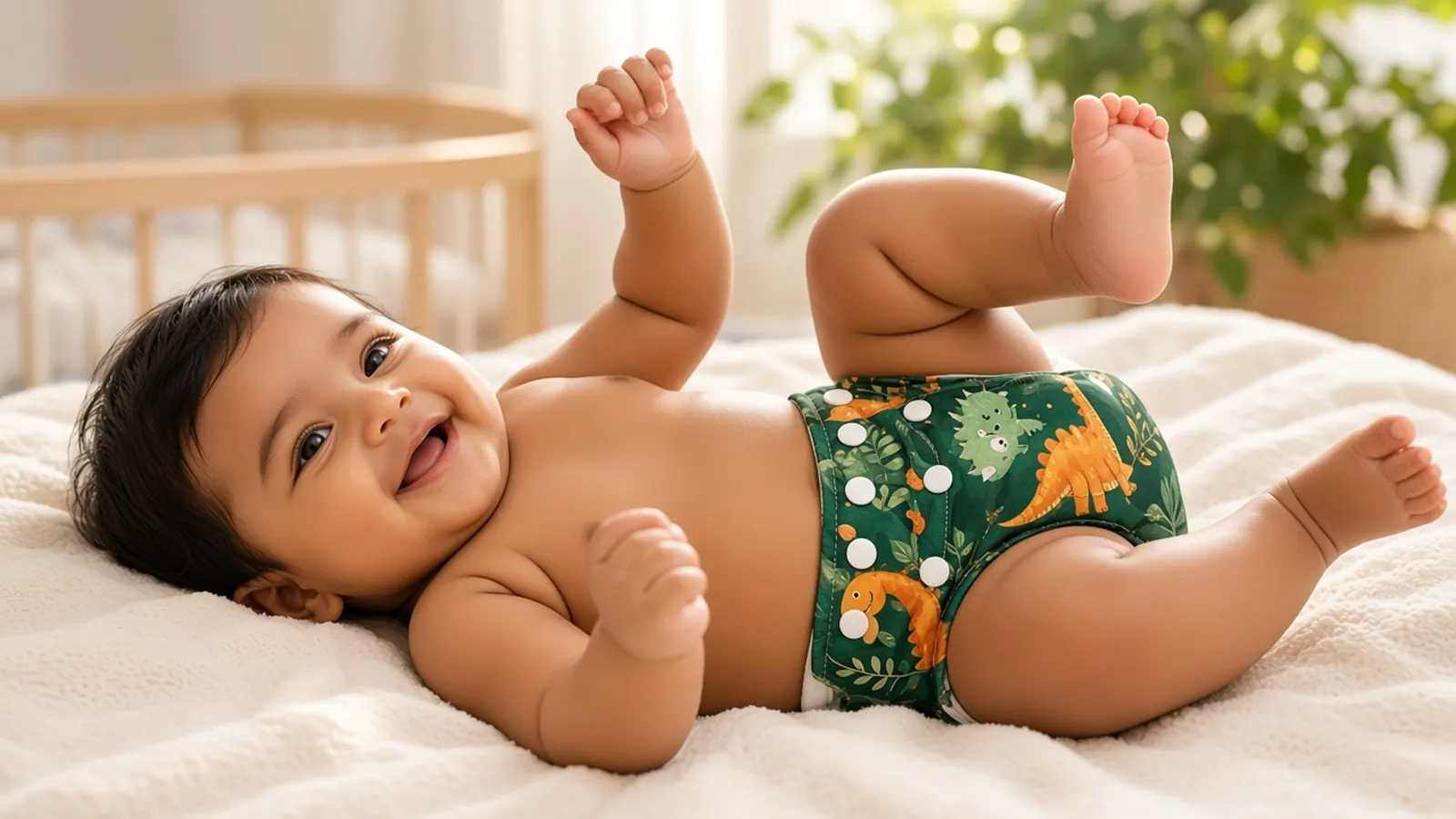
If you have a newborn at home, or one on the way, you already know how many diapers a baby gets through. It is often eight to twelve changes a day in the early weeks. That adds up to a mountain of diapers, a steady monthly bill, and a lot of decisions you never thought you’d have an opinion on.
So it’s no surprise that more Indian parents are taking a second look at baby cloth diapers. Not the plain cotton langot of our grandmothers’ time, but modern reusable diapers for babies, with a waterproof outer, snaps that adjust as your baby grows, and a soft absorbent insert you can wash and use again.
This guide walks you through it honestly: what’s good about cloth, where disposables still win, what pediatricians say about baby skin, and how to actually use and wash a cloth diaper without stress.
Please note: This article is general information, not medical advice. If you’re worried about your baby’s skin or health, talk to your pediatrician.
Why Your Choice of Diaper Matters
A diaper sits against your baby’s most sensitive skin for most of the day and night, for two to three years. Fit, absorbency and how often you change it all affect comfort.
It also shapes your household. Diapering touches your budget, your laundry, how much rubbish leaves your home, and how you pack for a trip to your parents’ place.
There’s no single right answer. Plenty of families use disposables, plenty use cloth, and many do both: cloth at home in the day, disposables at night or on long journeys. The goal is to choose what works for your baby and your routine.
Understanding Your Baby’s Skin: What Pediatricians Want Parents to Know

The guidance in this section is general baby-care information from public health sources (listed at the end). It is not about any particular diaper brand, and no doctor has reviewed or endorsed TOKOMAMY products.
Why baby skin needs gentle care
A newborn’s skin is thinner and more delicate than an adult’s, and its protective barrier is still maturing. That is why it can react quickly to wetness, rubbing, or harsh products. Gentle cleaning and keeping the skin dry go a long way.
Change wet and soiled diapers promptly
The American Academy of Pediatrics (AAP) puts it simply: change diapers frequently. When a wet or soiled diaper stays on too long, moisture makes the skin more likely to chafe. Urine can break down over time into irritating substances, and the digestive enzymes in stool can wear away at the skin.
This advice applies to every type of diaper, cloth or disposable. A wet diaper is the problem, not the material.
How diaper rash develops
At least half of all babies get diaper rash at some point, according to the AAP. The most common kind, irritant diaper rash, usually comes from a mix of:
- Moisture from urine and sweat, especially in hot, humid weather.
- Friction where a diaper rubs, often at the legs and waist.
- Prolonged contact with urine and stool.
- Irritants such as fragrances in wipes, or detergent left in fabric.
Yeast infections, often after a course of antibiotics, and allergic reactions to dyes, elastics or fragrances can also cause rashes.
Cleaning and drying
At each change, clean the area gently with water or a fragrance-free, alcohol-free wipe. Pat the skin dry instead of rubbing, and give your baby a few minutes without a diaper whenever you can. The NHS also recommends this “nappy-free time” to let skin breathe.
A thick layer of barrier cream, such as one with zinc oxide or petroleum jelly, can protect irritated skin. If you use cloth, ask your pediatrician which cream suits your baby, and use a thin liner if the cream’s label suggests it can affect fabric absorbency.
Choosing suitable diapering products
The AAP notes that there’s no current evidence showing which type of diaper is best at preventing diaper rash. What matters most for baby diaper rash prevention is:
- A diaper that absorbs well and keeps the skin as dry as possible.
- A fit that’s snug without leaving deep red marks.
- Changing it often enough.
- For cloth, washing it thoroughly and rinsing out all detergent.
When to see a doctor
Call your pediatrician if a rash:
- Doesn’t improve, or gets worse, after two to three days of home care.
- Has blisters, pimples, pus, peeling, or oozing or crusty sores.
- Is very painful, or your baby has a fever.
- Appears as a bright red rash with spots at the edges while your baby is on antibiotics.
For more on this, read our guide to cloth diapers and diaper rash.
Cloth Diapers vs Disposable Diapers: An Honest Comparison
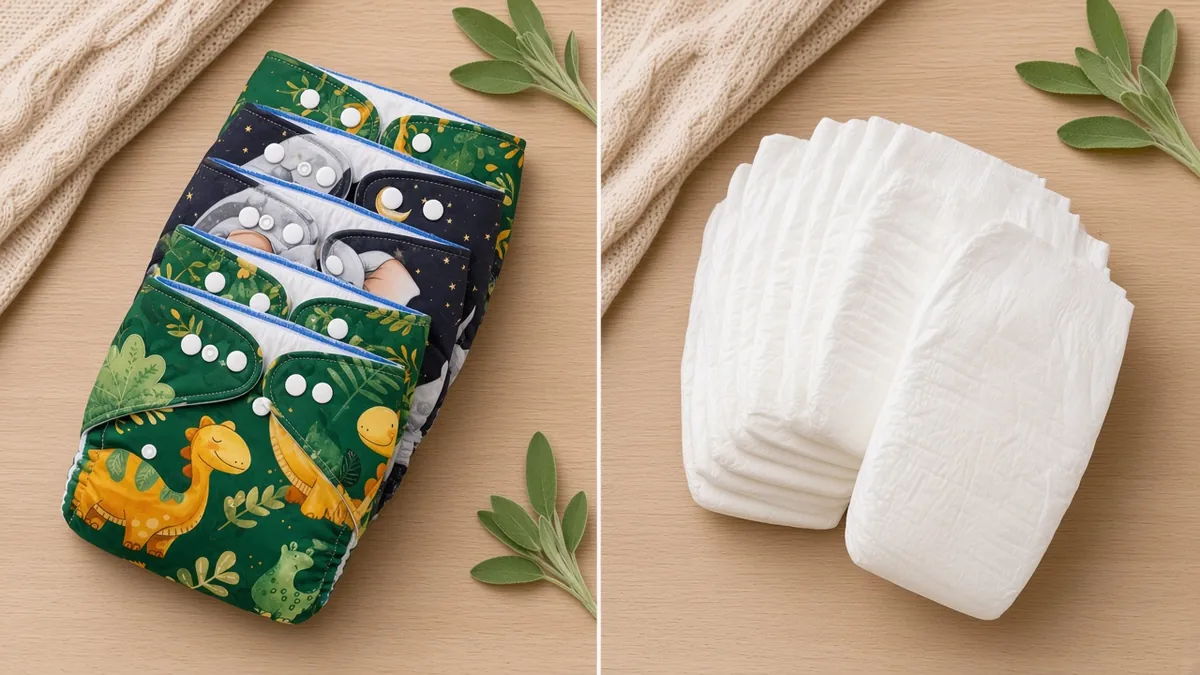
The cloth diapers vs disposable diapers debate is often louder than it needs to be. Each has real strengths. Here’s a fair side-by-side.
| Feature | TOKOMAMY reusable cloth diapers | Disposable diapers |
|---|---|---|
| Reusability | Washed and reused; designed for 250+ washes (per listing). | Single use, then thrown away. |
| Long-term cost considerations | Higher upfront cost for a stash, then mainly water, detergent and electricity. Savings depend on how many you use and for how long. | Low cost per pack, but an ongoing expense for 2 to 3 years. |
| Environmental waste | Far fewer diapers go to landfill; washing uses water and energy. | Generates a large volume of household waste. |
| Absorbency | 4-layer cotton insert, up to about 3 hours depending on usage; boosters can be added. | Gel cores are very absorbent and feel drier on the surface; often better for long nights. |
| Washing and maintenance | Needs rinsing, regular washing and drying. More effort. | None. A clear win for disposables. |
| Everyday convenience | Takes a little practice; easy once you have a routine. | Quick and familiar. A clear win for disposables. |
| Fit and adjustability | Adjustable snaps cover roughly 4 to 16 kg in one size. | Sized by weight; you move up sizes as baby grows. |
| Travel practicality | Possible with a wet bag, but bulkier to carry used diapers. | Easier on long journeys. Many families switch to disposables when travelling. |
A word on cost. We haven’t put a rupee saving here, because it depends on your baby’s age, how many changes you do, which disposable brand you would otherwise buy, and your water and electricity costs. A simple way to work it out for your family: count the disposables you use in a week, multiply by their price, and compare that with the one-time cost of a cloth stash plus a little extra laundry. Our cloth vs disposable cost guide walks you through it step by step.
Where disposables genuinely win: speed, long journeys, and nights for some babies who are heavy wetters. There’s no shame in using both.
Meet TOKOMAMY: Everyday Cloth Diapers, Made in India
TOKOMAMY is a small Indian brand that makes reusable baby cloth diapers for everyday use. Each diaper comes with its own insert pad, in fun prints like dinosaur, elephant, unicorn, teddy bear, reindeer and crescent sun, sold in sets of one to four on Amazon.in.
The idea is simple: a washable diaper that fits babies from around three months to three years, with sensible leak protection, so parents can try cloth without a complicated setup.
What Makes These Washable Baby Diapers Practical
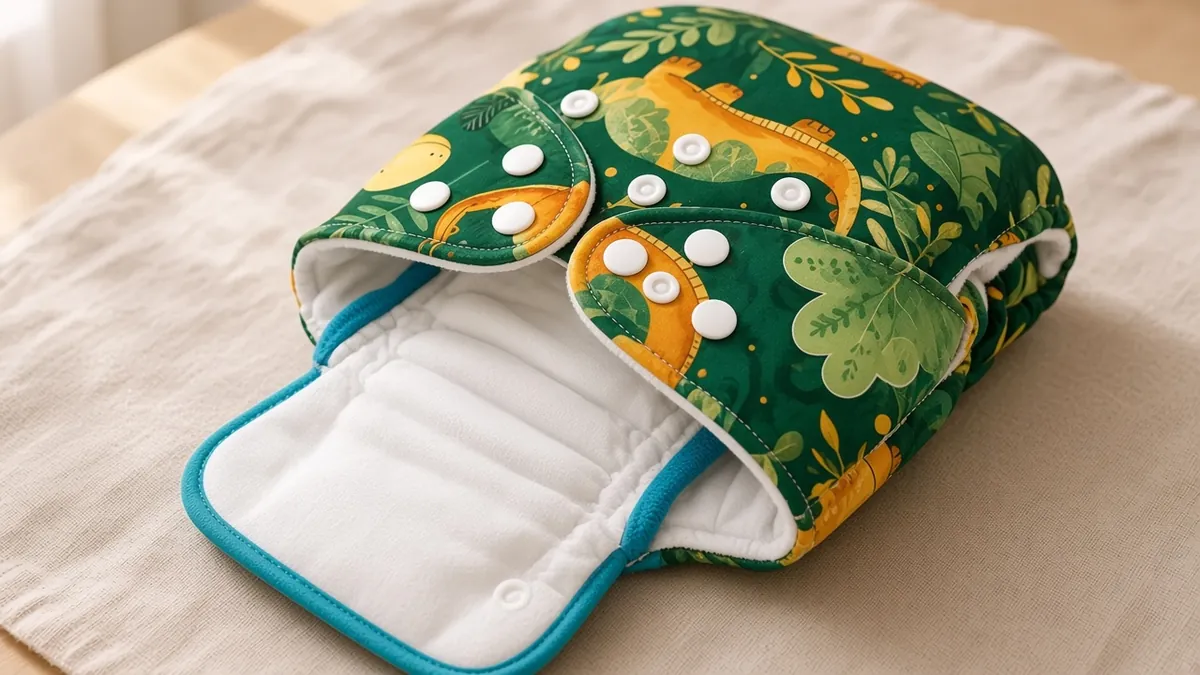
Here are the features listed for the product on Amazon.in. If you’re comparing options while searching for the best reusable cloth diapers for babies, these are the details worth checking on any brand.
A reusable diaper with a separate insert pad
The diaper is a washable outer with a separate absorbent insert pad. You place the insert in the diaper before use, and take it out again for washing. This means the insert and outer can dry separately, which helps them dry faster.
Adjustable snap buttons for a growing baby
Rows of snap buttons let you adjust the waist and rise. The listing gives a fit range of about 4 to 16 kg, roughly three months to three years. Adjustable cloth diapers like this mean you aren’t buying a new size every few months.
Waterproof outer layer
A waterproof outer layer keeps wetness inside the diaper, so clothes and bedsheets stay dry.
Dual leak guards and a tummy pad
Dual leak protection guards at the legs help prevent side and back leaks. A built-in tummy pad adds an extra layer of absorbency at the front, which is useful for boys and tummy sleepers.
A 4-layer cotton insert
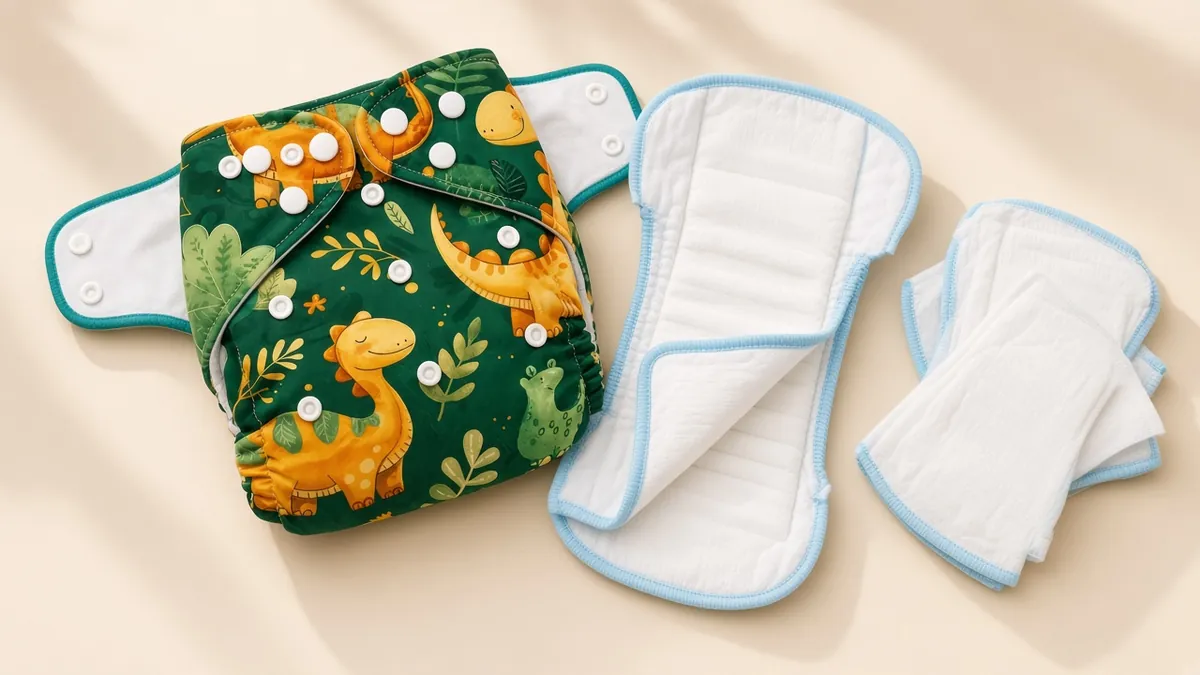
Each diaper comes with an extra-large 4-layer cotton insert. The listing says it can keep your baby comfortable for up to about three hours, depending on your baby and how heavily they wet. For longer stretches or heavy wetters, you can add a booster or a second insert.
Soft, quick-drying and built to last
The fabric is described as soft and quick-drying, and the diapers are designed for more than 250 washes. They are made in India.
Designed for everyday use
These are everyday diapers for home, outings and visits to family, not a special-occasion product. Starting with two to four diapers is a gentle way to test cloth before building a full stash. Our guide on how many cloth diapers you need can help you plan.
How to Use a Cloth Diaper, Step by Step

If you’ve never used pocket cloth diapers or insert-style diapers before, the first few changes feel slow. By the end of the week, it’ll feel normal.
Step 1: Prepare the insert
Wash new inserts a few times before first use. Cotton gets more absorbent after several washes. Then fold the insert to fit the diaper and lay or tuck it in, flat and smooth, with no bunching at the edges.
Step 2: Set the size
Adjust the rise snaps on the front panel to roughly match your baby’s size. Smaller babies need the rise folded down; older babies use it fully open. Our size and fit guide shows this in detail.
Step 3: Put it on
- Lay your baby on the open diaper, with the back edge at about waist level.
- Bring the front up between the legs.
- Fasten the waist snaps so you can slide two fingers in at the tummy.
- Run a finger around the leg openings and tuck the leak guards into the leg creases, not on the thigh.
Step 4: Know when to change
Change your baby as soon as the diaper is soiled, and roughly every two to three hours when wet, or sooner for newborns. Cloth doesn’t feel as dry as a gel-filled disposable, so check often at first until you learn your baby’s rhythm. For more detail, see how to use cloth diapers.
Washing and Drying Your Cloth Diapers
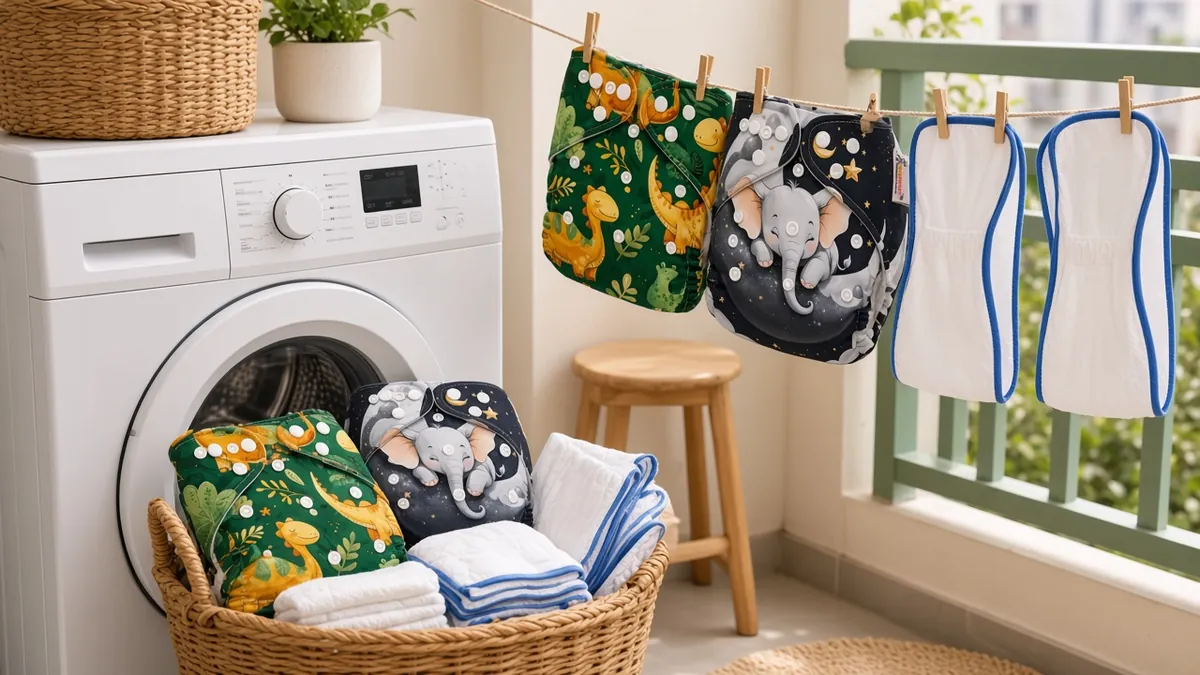
Washing is the part most parents worry about. In practice it’s a simple routine.
- Remove solids. Shake or rinse poo into the toilet. Breastfed-baby poo is water-soluble, but once solids start, always remove them first.
- Separate and rinse. Take the insert out of the diaper and give both a cold rinse.
- Store dry. Keep used diapers in a dry, lidded bucket or wet bag until wash day. Don’t leave them soaking for days.
- Wash every one to two days. Use a warm wash with a regular amount of mild detergent, without fabric softener or bleach. Follow the care instructions that come with your diapers.
- Rinse well. An extra rinse removes leftover detergent, which can irritate skin and reduce absorbency.
- Dry. Sunlight is excellent: it dries quickly and helps fade stains. Dry the waterproof outer in shade or indirect sun, and avoid high heat. In the monsoon, dry indoors near a fan.
Our full guide on how to wash cloth diapers includes hand-wash steps and fixes for smells.
Common Mistakes Parents Should Avoid
- Using fabric softener. It coats fibres and stops them absorbing. This is a common cause of leaks.
- Not prepping new inserts. Unwashed cotton absorbs less at first.
- Leak guards outside the leg crease. Leaks often come from fit, not absorbency.
- Waiting too long between changes. Cloth needs changing a little more often than a disposable.
- Too much or too little detergent. Too much leaves residue; too little leaves smells.
- Rash creams without checking. Some thick creams can make fabric repel water.
Still getting leaks? Read why cloth diapers leak and how to fix it.
Travelling with Cloth Diapers
- Pack a wet bag. A zipped waterproof bag keeps used diapers sealed until you get home.
- Bring one or two more than you think you need, plus a spare insert for heavy wetters.
- Stuff inserts before you leave so changes on the go are quick.
- Mix and match. On long train rides or flights, many parents use disposables and switch back to cloth at their destination.
More ideas in our travelling with cloth diapers guide.
Common Questions from Parents
Is cloth diapering a lot of extra work?
Expect about one extra load of laundry every day or two, and a few minutes of rinsing. Most parents say it becomes routine within a couple of weeks.
Can I use cloth only part-time?
Absolutely. Even replacing a few disposables a day reduces waste and cost. Part-time is how many families start.
Are eco-friendly baby diapers really better for the planet?
Reusable diapers cut down the number of disposables that go to landfill. They do use water and energy for washing, so the overall benefit depends on how you wash and dry them. Full loads and line drying make the biggest difference.
Frequently Asked Questions
1. What are pocket cloth diapers?
A pocket cloth diaper is a waterproof outer with an inner opening, or pocket, that you fill with an absorbent insert. Insert-style diapers work in a similar way: a separate pad goes into the diaper and comes out for washing.
2. From what age can my baby use TOKOMAMY cloth diapers?
The listing gives a fit of roughly 4 to 16 kg, from about three months to three years. Always check fit on your own baby, as body shape varies.
3. How long can a cloth diaper stay on?
The listing says up to about three hours, depending on usage. In practice, change a wet diaper every two to three hours and a soiled one straight away.
4. Do cloth diapers cause diaper rash?
No diaper type is proven to cause or prevent rash. Frequent changes, gentle cleaning, drying the skin, and well-rinsed diapers matter most. See your doctor if a rash doesn’t improve within two to three days.
5. Can I use cloth diapers at night?
Some babies do well in cloth at night with an extra insert or booster. Heavy wetters may do better in a disposable overnight. Try it and see what suits your baby.
6. How many cloth diapers do I need?
For full-time use, roughly 12 to 20, depending on your baby’s age and how often you wash. For part-time use, 4 to 8 is a good start.
7. Can I wash cloth diapers by hand?
Yes. Rinse, then wash in warm water with mild detergent, scrub gently, and rinse thoroughly until the water runs clear.
8. Can I use diaper rash cream with cloth diapers?
Yes, but some thick creams can reduce fabric absorbency. Use a cream your pediatrician recommends, and a disposable or washable liner if needed.
9. How long do TOKOMAMY diapers last?
They are designed for 250+ washes, according to the Amazon.in listing. Following the care instructions helps them last.
10. Where can I buy them?
You can browse the range on our shop page. Purchases are completed on Amazon.in.
The Bottom Line

Cloth diapering isn’t about being a perfect parent or doing everything the hard way. It’s one more option, and for many families it means fewer bins of disposables, softer fabric against baby’s skin, and diapers that grow with their child.
It also means more laundry and more frequent changes, and that’s okay to admit. Start small, use both if that helps, and see how it feels for your family.
If you’d like to give it a try, have a look at the TOKOMAMY cloth diapers range. A starter set of two is an easy way to begin. And if you have questions, we’re always happy to help through our contact page.
Purchases are completed on Amazon.in. This article is general information, not medical advice. Always speak to your pediatrician about your baby’s health.
Thinking of trying cloth? Start small with a set of two and see how it fits your routine.
Sources
- American Academy of Pediatrics, HealthyChildren.org: Diaper Rash
- NHS: Nappy rash
- NHS: Washing and bathing your baby
- Mayo Clinic: Diaper rash: Symptoms and causes
- Mayo Clinic: Diaper rash: Diagnosis and treatment
- Product details: TOKOMAMY listing on Amazon.in