
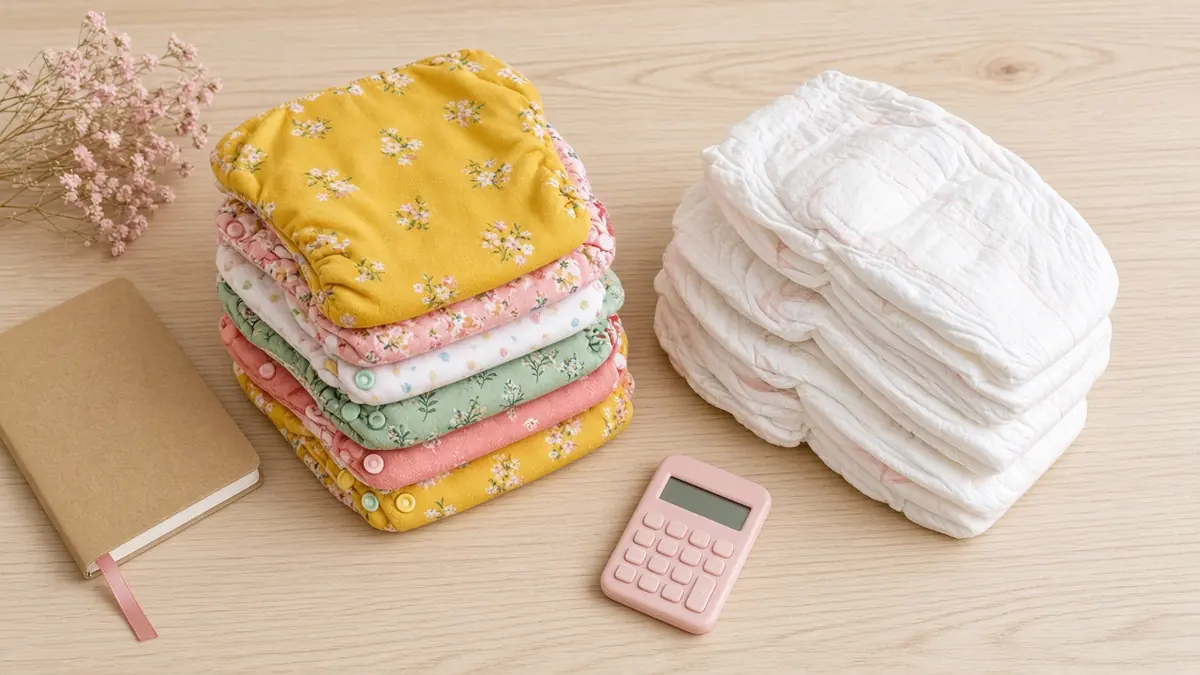
If you are expecting a baby or have just brought one home, diapers quickly become one of the biggest line items in your monthly budget. Many Indian parents now ask the same question: should we stick with disposables, switch to reusable cloth diapers, or use a mix of both? This guide compares the two honestly, covering cost, comfort, convenience and the environment, so you can choose what fits your family.
What is a modern cloth diaper?
Forget the old idea of a folded cotton langot held with a pin. A modern cloth diaper is a shaped, waterproof outer shell with a soft inner lining and an absorbent insert pad. It closes with snap buttons, has elastic around the legs, and can be washed and reused many times.
TOKOMAMY cloth diapers, for example, pair a waterproof outer layer and dual leak guards with an extra-large 4-layer cotton insert. They have a built-in tummy pad and adjustable snaps that fit babies from about 4 to 16 kg, which is roughly 3 months to 3 years. You can browse the full range in our cloth diaper collection.
Cost: how to do the maths for your own family
Online cost comparisons often quote big savings figures, but the real number depends on your baby, the brand of disposable you buy and how often you change diapers. Rather than trusting a headline figure, it is better to work it out with your own numbers. Here is a simple way to do it.
Step 1: Work out your disposable spend
- Count how many disposables your baby uses in a typical day.
- Check the price per diaper on the pack you normally buy (pack price ÷ number of diapers).
- Multiply: diapers per day × price per diaper × 30 gives your monthly cost.
- Multiply by the number of months you expect to diaper. Most children use diapers for well over two years.
Step 2: Work out your cloth diaper spend
- Decide how many cloth diapers you need for a comfortable wash rotation (our guide on how many cloth diapers you need helps here).
- Add the cost of the diapers. At the time of writing, TOKOMAMY packs on Amazon.in range from single diapers to packs of 4, and each diaper comes with its own insert. Prices change, so check the current price on the product page.
- Add a modest amount for detergent, water and electricity for the extra washes.
Step 3: Compare
Cloth costs more on day one, because you buy a set of diapers upfront. Disposables cost less on day one but keep costing money every single month. Because a one-size cloth diaper with adjustable snaps can be used as your baby grows, the same set can last through many months of use. TOKOMAMY diapers are designed for 250+ washes. The longer you use cloth, the more the comparison tends to favour it.
Tip: Many families use cloth at home during the day and keep a few disposables for long journeys or the first few nights. A mixed approach still reduces your monthly spend.
Comfort and skin
Parents often choose cloth because of how it feels against the skin. Cotton inserts and soft linings are breathable and free of the fragrances some disposables contain. That said, no diaper is rash-proof. What matters most for your baby’s skin is changing promptly when wet or soiled, keeping the skin clean and dry, and making sure the diaper fits well. We cover this in detail in Cloth Diapers and Diaper Rash.
Convenience
Disposables win on pure convenience: use, roll, throw. Cloth needs a simple routine of rinsing, storing and washing every one or two days. For most families the routine becomes second nature within a couple of weeks, especially with a washing machine. In much of India, plenty of sunshine also makes drying fast. Our step-by-step washing guide keeps it simple.
Waste and the environment
Every disposable diaper is used once and thrown away, so a single baby produces a large pile of diaper waste over the diapering years. Reusable diapers greatly reduce what goes in the bin. They do use water and energy for washing, so you can make the biggest difference by washing full loads, using cold or warm (not hot) cycles where the care label allows, and line-drying instead of tumble drying.
Quick comparison
| Cloth diapers | Disposable diapers | |
|---|---|---|
| Upfront cost | Higher | Low |
| Ongoing cost | Low (washing only) | Every month |
| Waste | Much less | Daily bin waste |
| Effort | Wash routine needed | Minimal |
| Sizing | One size with adjustable snaps | New sizes as baby grows |
| Travel | Needs a wet bag | Very easy |
Which should you choose?
There is no single right answer. Cloth suits families who want to cut monthly spending and household waste and do not mind a little laundry. Disposables suit situations where washing is not practical. Many parents find the sweet spot is cloth for most of the day and disposables as a backup.
If you would like to try cloth without a big commitment, start with a single diaper or a 2-pack, use it for a week, and see how your baby and your routine respond. Then build up your stash.
Ready to try cloth? Explore TOKOMAMY reusable cloth diapers, made in India, with adjustable snaps and a 4-layer cotton insert.
Frequently asked questions
Are cloth diapers really cheaper than disposables?
Can I use cloth diapers at night?
From what age can my baby wear TOKOMAMY cloth diapers?
Where do I buy?
Purchases are completed on Amazon.in. Product details are taken from our Amazon listings; prices and availability may change.