
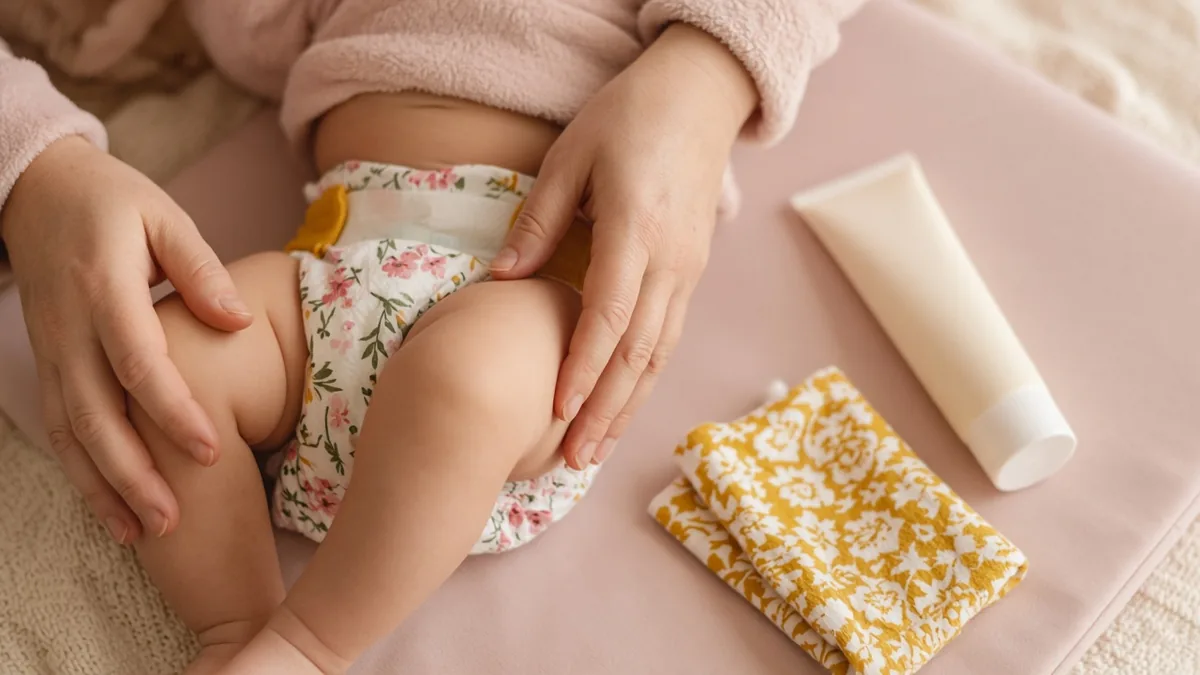
Diaper rash is one of the most common skin problems in babies, and it can happen whatever kind of diaper you use. Many parents switch to cloth hoping to prevent rashes, while others worry that cloth might cause them. The truth is in the middle: the type of diaper matters less than how often it is changed, how clean and dry the skin is kept, and how well the diaper fits. This guide explains what parents should know.
Important: This article is general information, not medical advice. If a rash is severe, has blisters, spreads, does not improve within a few days, or your baby has a fever or seems unwell, see your paediatrician.
What causes diaper rash?
Diaper rash usually appears as red, sore-looking patches in the diaper area. Common triggers include:
- Prolonged contact with wetness or stool. This is the most common cause.
- Friction from a diaper that rubs.
- Irritants such as soaps, fragrances, or detergent left in fabric.
- Heat and humidity, which can be a factor in Indian summers and the monsoon.
- Infection, for example yeast, sometimes after antibiotics.
- Changes in diet, such as when solids are introduced.
Do cloth diapers cause or prevent rash?
Neither type of diaper guarantees a rash-free baby. What cloth does offer is breathable cotton inserts and soft linings, and no added fragrance in the diaper itself. Many parents like this for sensitive skin. On the other hand, a cloth diaper that is left on too long, or that holds detergent residue, can irritate the skin.
So the real answer is that good diaper habits prevent rash, and cloth diapers work well when used with those habits.
Habits that help protect your baby’s skin
The UK’s NHS gives practical advice for preventing and easing nappy rash, including changing wet or dirty nappies as soon as possible, keeping the skin clean and dry, leaving nappies off when possible, and using dry liners with reusable cloth nappies (NHS: Nappy rash). Here is how that looks with cloth:
1. Change promptly
Change as soon as the diaper is soiled and when it feels wet. The TOKOMAMY insert is designed to keep baby dry for up to 3 hours, depending on usage, but if your baby has sensitive skin, changing more often is a good idea.
2. Clean gently and dry well
Clean the area with water or fragrance-free, alcohol-free wipes. Pat the skin dry gently before putting on a fresh diaper.
3. Give diaper-free time
A little time without a diaper each day, on a washable mat or towel, lets the skin breathe.
4. Get the fit right
A diaper that is too tight rubs; one that is too loose leaks and keeps skin wet. Adjust the snaps so the leg elastics sit in the crease and the waist is snug but comfortable.
5. Rinse out detergent
Detergent residue left in inserts can irritate the skin. Use a mild detergent in the right amount and add an extra rinse. Our cloth diaper washing guide covers this step by step.
6. Be careful with creams
If you use a barrier cream, apply a thin layer to the skin. Some creams can build up on cloth and reduce absorbency, so a disposable or washable liner between cream and insert can help. Ask your paediatrician which cream suits your baby.

What to do if a rash appears
- Change more frequently and increase diaper-free time.
- Keep the area clean and dry. Avoid soaps, bubble bath and talc on the rash.
- Check your wash routine for residue and do an extra rinse.
- If you have been using a cream on cloth, consider a liner.
- See your paediatrician if the rash is not improving within a few days or looks severe.
Cloth diapering in hot, humid weather
Indian summers and the monsoon bring heat and humidity that can make any diaper feel warm. Dress your baby in light cotton clothes over the diaper, change a little more often, and make sure washed diapers are fully dry before use. Damp diapers in the monsoon can smell and feel uncomfortable, so keep a few extra in your rotation. Our guide on how many cloth diapers you need can help.
Starting solids and teething
Many parents notice that rashes appear around the time solids are introduced, because stool changes in texture and acidity. Some also notice redness during teething, although the reasons are not always clear. During these phases, it helps to change a little sooner after a dirty diaper, rinse inserts promptly, and give extra diaper-free time. Keep notes on what your baby ate and when a rash appeared; patterns are useful to share with your paediatrician.
Key takeaways
- Any diaper can cause rash if left on too long. Prompt changes matter most.
- Keep skin clean and dry, and give daily diaper-free time.
- Get the fit snug but not tight.
- Rinse detergent out thoroughly and avoid fabric softener.
- Use liners with creams, and see a doctor if a rash is severe or lasts.
Soft on delicate skin. TOKOMAMY cloth diapers pair a soft, quick-drying fabric with a 4-layer cotton insert, in a one-size design for 4–16 kg.
Frequently asked questions
Can I keep using cloth diapers during a rash?
Which detergent is best for babies with sensitive skin?
When should I see a doctor?
Purchases are completed on Amazon.in. Product details are taken from our Amazon listings; prices and availability may change.