
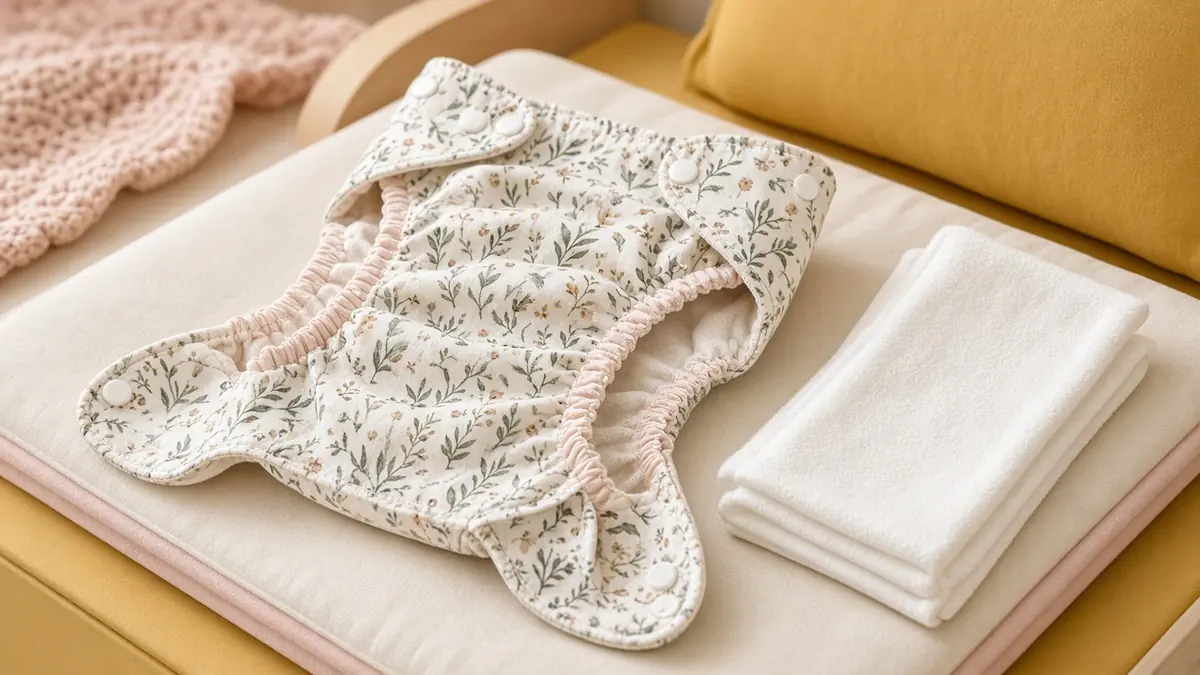
You have washed your new cloth diapers, put one on your baby, and an hour later there is a wet patch on their clothes. It is frustrating, but it is also very common, and almost always fixable. Most cloth diaper leaks come down to a handful of causes: fit, timing, absorbency or residue. Here is how to find the cause and fix it.
How a cloth diaper keeps things in
It helps to know how the parts work together. The insert absorbs, the inner lining sits against baby’s skin, the waterproof outer layer stops moisture getting through, and the leg elastics and leak guards seal the edges. TOKOMAMY diapers combine a waterproof outer layer with dual leak protection guards, an extra-large 4-layer cotton insert and a built-in tummy pad at the front. A leak means one of these is not doing its job, usually because of how the diaper is put on or cared for rather than a fault.
Cause 1: The fit is too loose
This is the most common cause. If there are gaps at the legs or waist, liquid escapes before the insert can absorb it.
Fix:
- Adjust the rise snaps at the front so the diaper is the right height for your baby.
- Fasten the waist snaps so you can slip one or two fingers in at the tummy, but no more.
- Run a finger around each leg opening. The elastic should sit in the crease where the leg meets the body, not on the thigh.
- Check for gaps at the back when baby is lying down.
Cause 2: The diaper was on too long
Every insert has a limit. The TOKOMAMY insert is designed to keep baby dry for up to 3 hours, depending on usage. A heavy wetter may reach the limit sooner.
Fix: Change a little earlier, or add a second insert or booster for longer stretches such as naps or car rides.
Cause 3: Fabric is peeking out
If any part of the insert or inner lining sticks out past the waterproof shell, moisture can wick straight onto clothes. This is called wicking.
Fix: Tuck the insert fully inside and make sure no fabric sits outside the leg elastic or above the waistband.
Cause 4: New inserts are not yet at full absorbency
Natural fibres like cotton often absorb less when they are brand new and improve over the first few washes.
Fix: Wash new inserts a few times before relying on them for longer stretches.
Cause 5: Residue build-up
Fabric softener, too much detergent and some nappy creams can coat fibres so liquid beads up and runs off instead of soaking in.
Fix:
- Stop using fabric softener on diapers.
- Use the right amount of mild detergent and add an extra rinse.
- If you use a nappy cream, apply a thin layer to skin and consider a liner.
See our washing guide for a full routine that prevents build-up.
Cause 6: Compression leaks
Tight clothing, a snug car seat strap or a baby carrier can squeeze liquid out of a full insert.
Fix: Choose slightly roomier bottoms over cloth diapers, and change before long car rides or carrier time.
Cause 7: Wear and tear
Over many washes, elastics can relax and waterproof layers can wear, especially with very hot washing, harsh chemicals or long hours in strong sun.
Fix: Follow the care label, wash at moderate temperatures, avoid bleach, and dry outer shells in shade or gentle sun. TOKOMAMY diapers are designed for 250+ washes, and gentle care helps them last.

Quick leak checklist
- Rise snaps set for baby’s size?
- Waist snug with one or two fingers of space?
- Leg elastics in the leg crease?
- Insert fully tucked in?
- Changed within about 3 hours?
- No softener or heavy cream build-up?
- Clothes not too tight over the diaper?
Tip: Point a baby boy downwards when putting on the diaper. It directs liquid into the thickest part of the insert.
When to try a different approach
If you have worked through every cause above and a diaper still leaks, look at your baby’s routine. Some babies wet heavily at certain times, such as after a feed or after waking, so an extra insert just for those times can solve the problem. Others leak only when lying on their tummy, which usually points to the waist or front rise. Keeping a quick note of when leaks happen and where the wet patch appears is the fastest way to find the pattern.
Key takeaways
- Most leaks come from fit: check rise, waist and leg elastics.
- Change within about 3 hours, or add a booster.
- Tuck all fabric inside the shell to stop wicking.
- Avoid softener and residue build-up.
- Gentle care keeps elastics and waterproof layers working.
Built for fewer leaks. TOKOMAMY diapers have dual leak guards, a waterproof outer layer and a built-in tummy pad.
Frequently asked questions
Why does my cloth diaper leak at the legs?
Why does the diaper leak even though the insert is not fully wet?
Can I use two inserts at once?
Purchases are completed on Amazon.in. Product details are taken from our Amazon listings; prices and availability may change.