
Washing is the part of cloth diapering that worries new parents most. The good news is that it is far simpler than it sounds. Once you have a routine, it takes a few minutes a day plus one wash load every day or two. This guide walks you through a simple, reliable routine that works in Indian homes, whether you use a washing machine or wash by hand.
Before you start: always read the care label on your diaper. The steps below are general good practice. If a label says otherwise, follow the label.
Why a good wash routine matters
A clean diaper is a comfortable diaper. A good routine removes waste and detergent residue, keeps the absorbent insert working properly, prevents lingering smells and helps your diapers last. TOKOMAMY diapers are designed for 250+ washes, and gentle, consistent washing helps you get the most out of them.
Before the first use
Wash new diapers and inserts before your baby wears them. Cotton inserts become more absorbent after a few washes, so do not worry if a brand-new insert seems less absorbent on day one.
The 4-step routine
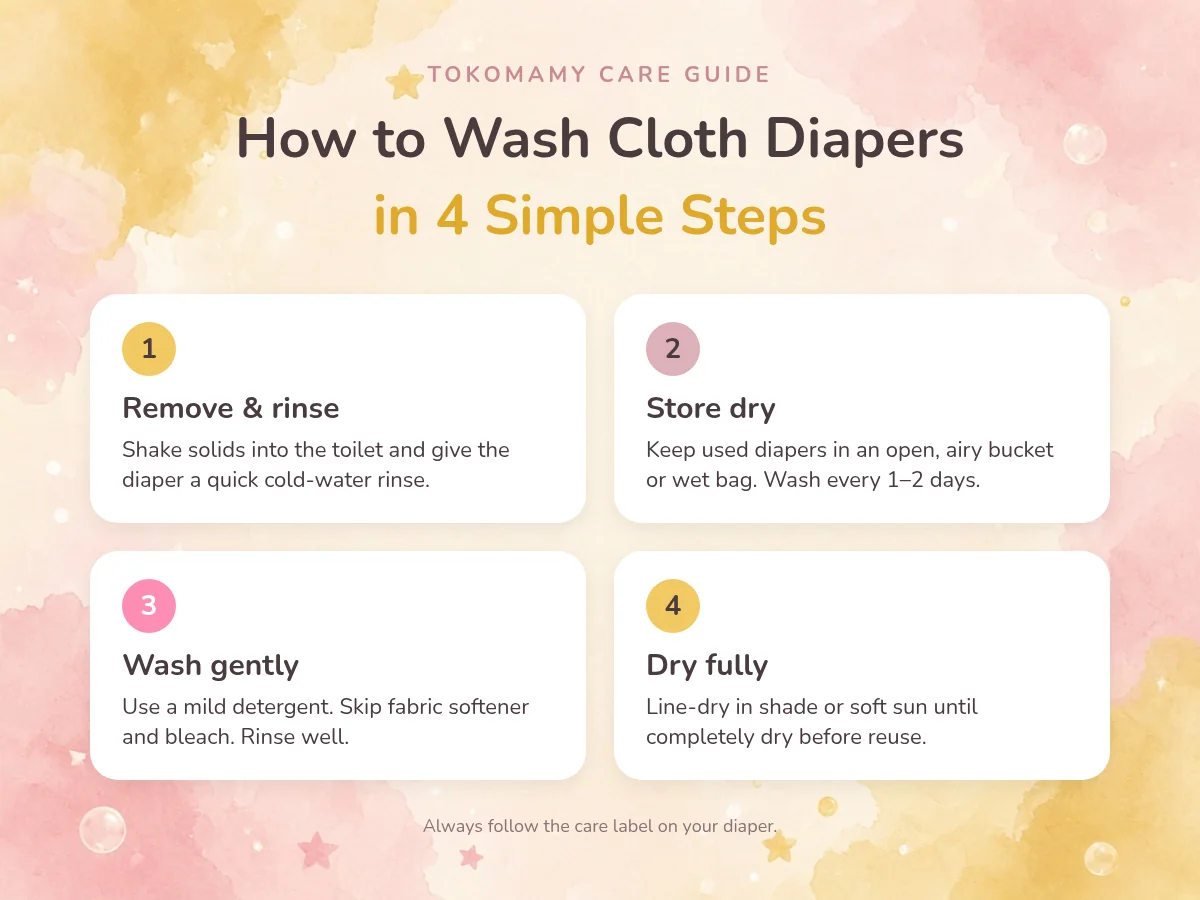
Step 1: Remove and rinse
After a change, separate the insert from the diaper. If there is solid waste, shake or scrape it into the toilet. Then give the diaper and insert a quick rinse in cold water. Cold water helps stop stains from setting. For an exclusively breastfed baby the waste is water-soluble, but a quick rinse still helps.
Step 2: Store until wash day
Squeeze out excess water and place used diapers in an open, airy bucket or a breathable wet bag. Avoid sealing them in an airtight container or soaking them for long periods, as that can encourage smells. Aim to wash every one to two days.
Step 3: Wash
In a washing machine:
- Run a short rinse or pre-wash first to flush out residue.
- Follow with a full wash cycle using a mild detergent at the temperature the care label allows.
- Fill the drum loosely, about two-thirds full, so the diapers can move and rub against each other. Adding a few small baby clothes can help with this.
- Run an extra rinse if your detergent tends to leave residue.
By hand:
- Soak briefly in water with a small amount of mild detergent.
- Scrub gently, paying attention to the inside of the insert.
- Rinse two or three times, until the water runs clear and no suds remain.
- Squeeze gently. Do not wring hard, as that can strain the elastics.
Step 4: Dry completely
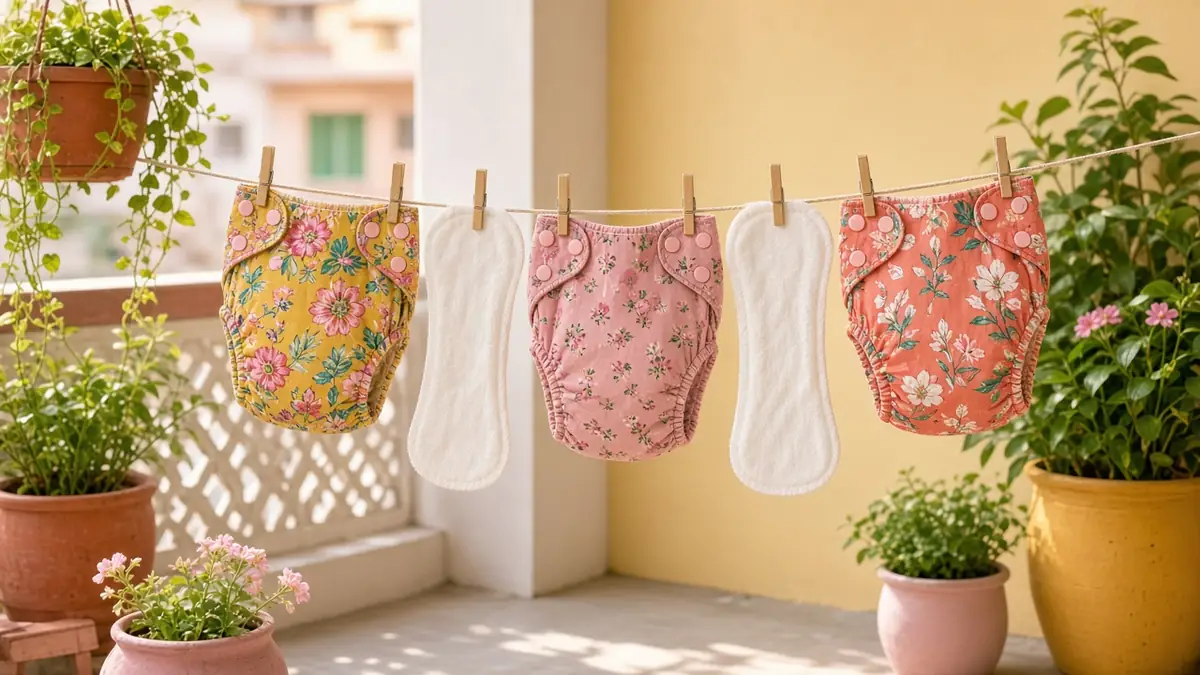
Line-dry the diapers and inserts. Indian sunshine is a great natural helper, but very strong midday sun for hours can be harsh on waterproof layers and elastics, so shade or gentle morning sun is ideal for the outer shells. Inserts can take more sun. Make sure everything is completely dry before you reuse it.

What to avoid
- Fabric softener: it coats fibres and reduces absorbency.
- Bleach and harsh chemicals: they can damage fabric and the waterproof layer.
- Too much detergent: more is not cleaner. Excess detergent leaves residue that can cause smells and reduce absorbency.
- Nappy creams applied straight onto the insert: some creams can build up on fabric. A thin layer on the skin, or a liner, helps.
- Very hot ironing or tumble drying on high: heat can damage elastics and waterproof layers.
Dealing with smells and stains
Stains: drying in the sun is a simple way to fade stains on cotton inserts. Rinsing promptly in cold water also helps a lot.
Smells: if diapers smell even after washing, the usual causes are detergent build-up, washing too infrequently, or overloading the machine. Try one or two extra rinse cycles, use a little less detergent, and make sure the drum is not packed tight.
Leaks after washing: if a diaper that used to work starts leaking, residue from softener or creams is often to blame. See our guide on why cloth diapers leak for fixes.
A sample weekly rhythm
- Every change: remove solids, rinse, store in an airy bucket.
- Every 1–2 days: pre-wash, main wash, line-dry.
- Every evening: put clean, dry inserts back into shells so tomorrow’s diapers are ready.
To keep this rhythm going you need enough diapers for one to two days plus drying time. Our guide on how many cloth diapers you need helps you work out the right number.
Washing in the monsoon
Rainy months make drying the hardest part of the routine. Hang diapers indoors near a fan or in a well-ventilated room, spread them out so air can flow, and dry inserts separately from shells because shells dry much faster. A final spin cycle in the washing machine removes extra water and shortens drying time. Never put away or use a diaper that still feels damp; it can smell and feel uncomfortable on baby’s skin. Keeping a few extra diapers in rotation during the monsoon takes the pressure off.
Key takeaways
- Rinse, store dry, wash every 1–2 days, and dry fully.
- Use mild detergent in the right amount, and skip softener and bleach.
- Do not overload the machine.
- Dry shells in shade or gentle sun; inserts can take more sun.
- Always follow your diaper’s care label.
Easy-care diapers for busy parents. TOKOMAMY cloth diapers are soft, quick-drying and washable, with a 4-layer cotton insert in every diaper.
Frequently asked questions
How often should I wash cloth diapers?
Can I wash cloth diapers with other clothes?
Which detergent should I use?
Do I need to soak cloth diapers?
Purchases are completed on Amazon.in. Product details are taken from our Amazon listings; prices and availability may change.